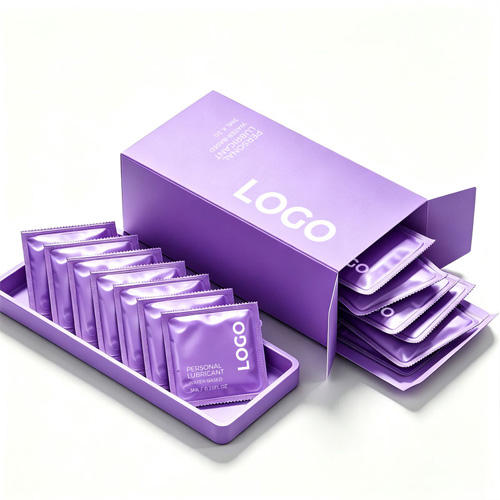
In customer reviews, complaints regarding tackiness, artificial pilling, or white residue are common failure points for water-based Personal Lubricant. These sensory issues disrupt intimate moments and lead consumers to question product safety. Correcting these rheological shortcomings through formula optimization is essential for building repeat customer loyalty.
Pilling and white residue occur when conventional thickening systems undergo phase separation under frictional shear. Lower-cost contract manufacturing often relies on generic carboxymethylcellulose (CMC) or basic carbomers; these polymer chains can dehydrate and aggregate when exposed to natural body salts or sweat, forming sticky white strands or visible flakes. Upgraded formulations replace these with cross-linked hydroxyethylcellulose combined with sodium polyglutamate, creating polymer networks that resist shear and electrolyte stress to remain clear and smooth during use.
Artificial tackiness occurs when polymers leave a stiff, non-breathable film over the skin. Formulators address this by layering natural humectants of varying molecular weights to create a dynamic, hydrating fluid cushion. Low-molecular components hydrate the surface layers, while higher-molecular polymers provide sustained fluid glide, mimicking the texture of natural secretions while rinsing away cleanly with water.
Eliminating these tactile flaws requires precise laboratory rheology testing. Partnering with an experienced manufacturer allows brands to refine their formulations and develop reliable products.