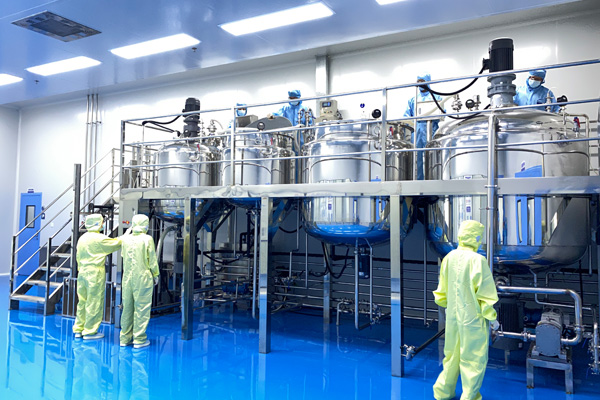
In the field of lubricating jelly OEM, many factories claim to have cleanrooms, but very few truly meet the medical device production standard of a "Class 100,000 dust-free cleanroom." This high-level purification standard directly determines the upper limit of microbial control for the product. For lubricating jelly frequently in contact with sensitive areas, the amount of airborne particulate matter and microorganisms directly affects product safety and shelf life stability, serving as a critical benchmark for OEM quality.
A 100,000-class cleanroom means air passes through a high-efficiency filtration system with over 15 air changes per hour, along with strict differential pressure and temperature-humidity control. Producing in this environment prevents microbial contamination and heavy metal dust from the source. Compared to ordinary workshop settings, this medical-grade cleanliness significantly reduces preservative use, enhancing product hypoallergenicity and gentleness. When choosing a contract manufacturer, brands can directly assess capability by inspecting cleanrooms larger than 3,000 square meters. High-level hardware investment means stricter 21-step quality control processes, which directly translate into safety selling points on e-commerce platforms and extremely low after-sales rates.
In the current environment of increasingly stringent medical device regulations, having compliant certifications and high-grade workshops is the entry barrier for brands to access high-end channels such as Amazon and European and American chain pharmacies. The qualification endorsement of shared factories and the high-quality products produced in Class 100,000 cleanrooms enable new brands to establish strong credibility from the outset. This invisible hardware asset is the core guarantee for brands to achieve high unit price premiums and build a global high-end care image, as well as a true reflection of a company's competitiveness.